
Finding Greenburgh Residents by Record
Greenburgh keeps no master roll of current residents. The useful records sit with different custodians. The town parcel system identifies property and recorded owners. The Westchester County Clerk holds land and legal filings. State tools confirm narrow facts about a person already named. An address is usually the strongest first anchor for a Greenburgh lookup. It leads to a parcel ID, a tax-map reference, and the owner block on a property card. A name works as an anchor too. It just needs a second fact such as an address, a date, a business role, or an older locality.
Think of Greenburgh research as a short chain rather than a single query. A property record names an owner but never proves who else lives at the address. A deed records only the parties to one filed transaction on one date. A historical city directory reflects what its publisher printed in a single edition. Layered together, these pieces build real trust. They make the Greenburgh residents directory far more dependable than any lone result.
- Enter the Greenburgh address in the town GIS and save the parcel ID, situs address, and property-card links.
- Check the card’s owner and mailing blocks, while treating a mailing address as a lead rather than proof of residence.
- Search the Westchester County Clerk’s land index for the current owner as grantee, then note the deed date and legal description.
- For a named registered voter, use the New York lookup with the required county, name, date of birth, and ZIP details.
- For an earlier Greenburgh household, search the library, county archives, directories, newspapers, census, and a targeted records request.
Note: Keep the portal name, exact search fields, date, and the limits of each Greenburgh result so the next person can retrace the trail.
Greenburgh Records Offices for Residents
Record custody in Greenburgh splits among Town Hall, Westchester County, and state agencies. Local cultural institutions hold a share too. The town GIS and assessor route comes first for any Greenburgh parcel. Land records run through the County Clerk in White Plains. The Greenburgh Town Clerk handles town vital-record jurisdiction, local forms, FOIL coordination, and civic-association lists. To follow each parcel-oriented source in fuller detail, the Greenburgh street directory by address walks the whole address sequence step by step.
Westchester County Clerk
110 Dr. Martin Luther King Jr. Blvd.
White Plains, NY 10601
Greenburgh Assessor and GIS
177 Hillside Avenue
Greenburgh, NY 10607
914-989-1520
Greenburgh Town Court, the town police records unit, the tax office, and the Building Department each carry separate duties. Any Greenburgh request should name the office holding the record, the address or parcel, the time period, and the exact item sought. That focused route beats a broad request for a person's information every time.
Greenburgh GIS Parcel Clues
The Greenburgh CAI and Axis parcel viewer exists for address and parcel work. The town's instructions are simple. Accept the notice, then open the search control. Enter just the street number and street name. Leave off any suffix. Then select the right parcel and switch to the Assessment view. Greenburgh cards can link to a CAI Property Card, tax map, and survey. They also reach a building sketch, current tax rates, and assessment rolls. An Identify tool maps adjoining and directly across-the-street parcels as well.
| Greenburgh GIS control | Use | Practical result |
|---|---|---|
| Address search | Street number plus street name | Selects a Greenburgh parcel from the result list |
| Parcel-number search | Dotted section-block-lot format | Finds a parcel when a street search fails |
| Assessment tab | Open after parcel selection | Shows assessment and mailing information |
| Identify tool | Hover or click on the map | Returns an address popup for nearby parcels |
| Tax map or survey link | Open from the parcel card | Connects the address to legal parcel context |
The Greenburgh parcel viewer is the official place to start. Its property card anchors a Greenburgh residents directory search nicely, but remember what it is: an assessment record, not proof of title or current occupancy.
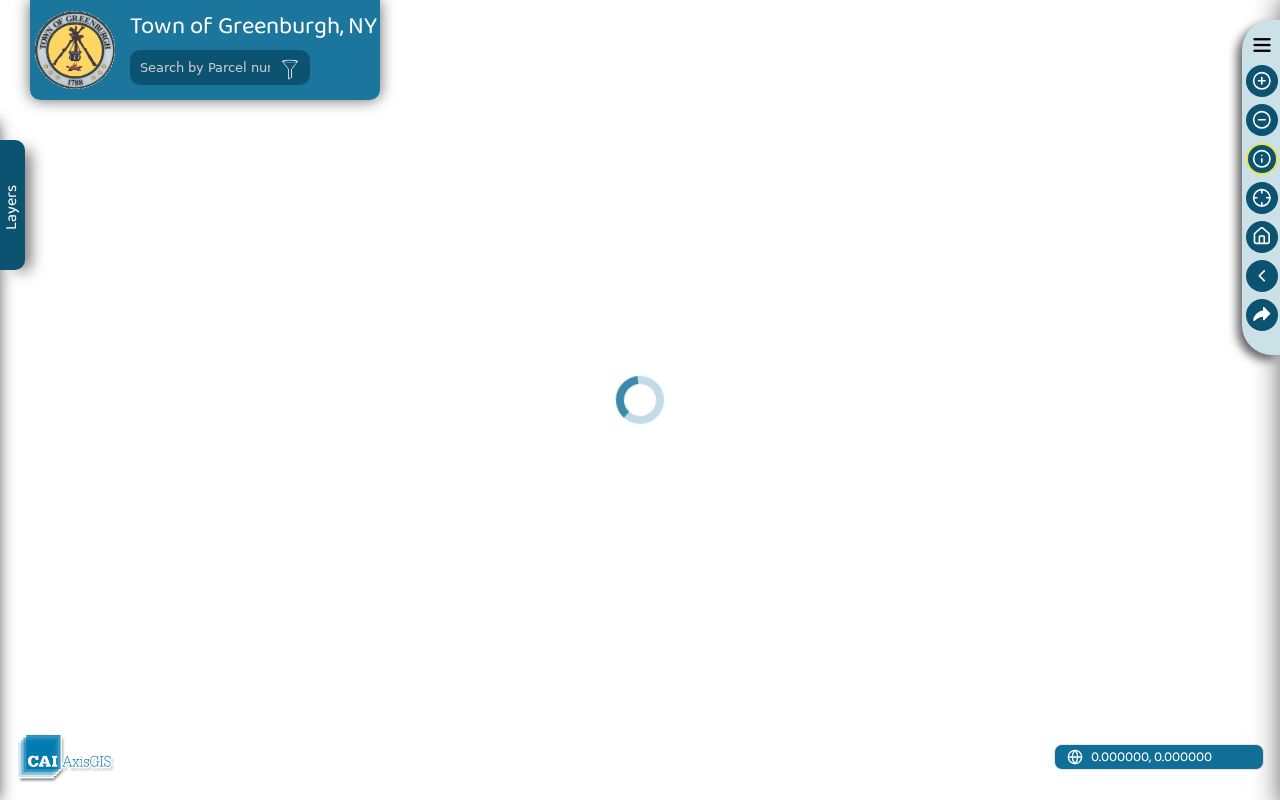
Greenburgh parcel results can include an alternate ID, a former SBL, district fields, assessment history, and permit or sale clues. Those extra fields help separate similar addresses.
- Parcel
- A mapped tax unit tied to an assessment record and legal land reference.
- Situs address
- The physical Greenburgh location used for a parcel, map, inspection, or permit.
- Mailing address
- The tax correspondence address, which can belong to an owner, bank, attorney, or business elsewhere.
- Index
- A finding tool that points to a record; it is not always the document image or certified copy.
Greenburgh Voter Lookup Limits
The New York voter registration and poll-site lookup does one narrow job. A Greenburgh search demands Westchester County, last name, first name, date of birth, and ZIP. The state page also needs a cookie-enabled, JavaScript-enabled browser. It suits a person who already holds enough identifying facts. That person can test a registration or poll-site question. Treat it as a single-voter confirmation, not a Greenburgh street browse or household directory.
The official voter lookup form displays exactly the fields a Greenburgh confirmation requires. Keep the voter result inside its stated purpose. Never stretch it into a block list.
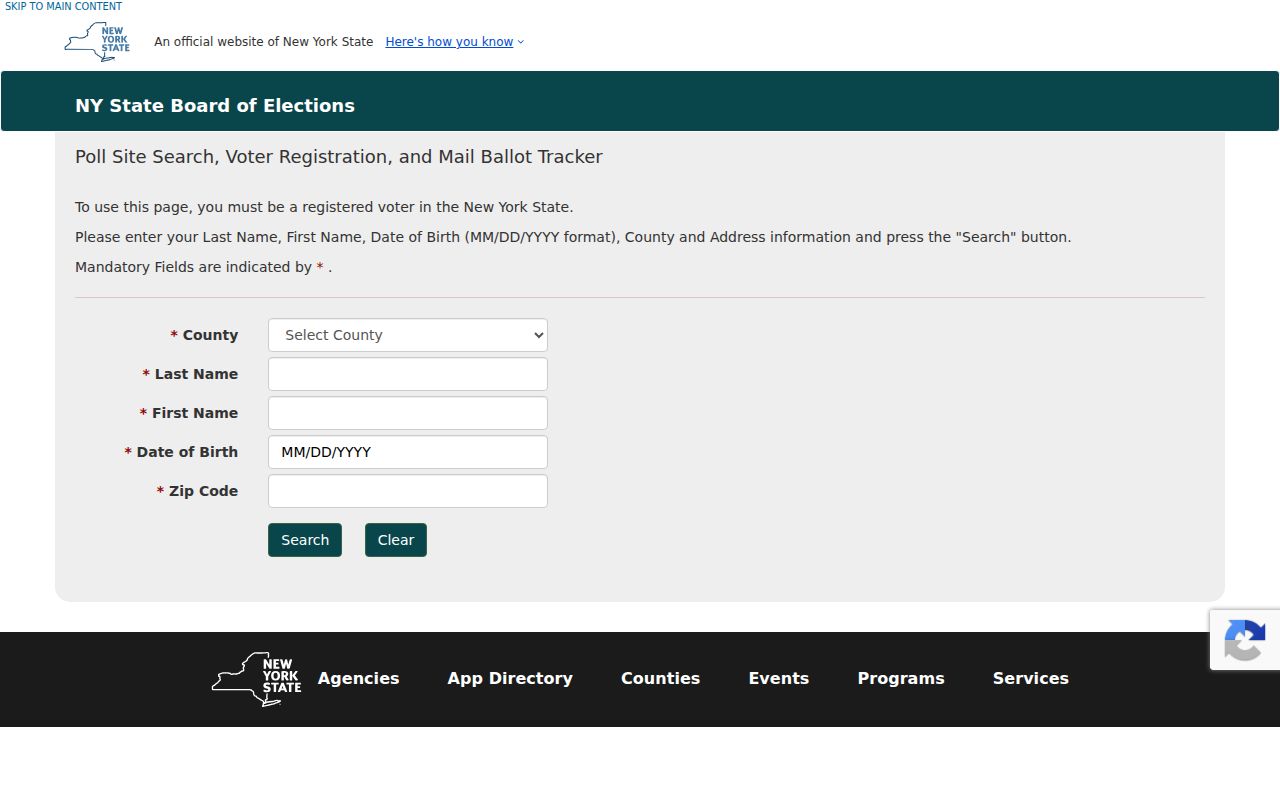
Greenburgh voters have a second option. The Westchester polling search takes an address, street number, street name, and ZIP, and returns polling and ballot information.
Election records. New York voter-file requests require an elections-purpose statement under Election Law § 3-103(5), and the public lookup does not authorize a Greenburgh resident roster.
Greenburgh Resident Directory Sources
Every current Greenburgh source captures a different relationship to a place or event. The town card suits a parcel owner and the assessment trail. WRO is the tool for recorded parties and legal descriptions. A state voter search fits one registered voter, provided the required fields are in hand. The Town Clerk's civic-association material marks an official route to association information. However, the town publishes no public master member directory.
| Greenburgh source | What it can establish | Custodian | Access route |
|---|---|---|---|
| GIS and CAI card | Parcel, owner block, assessment, map links | Town of Greenburgh | Public address or parcel viewer |
| Tax portal | Tax account clue by address, last name, or account number | Greenburgh Tax Department | Portal or office route |
| WRO Land Records | Deed parties, dates, legal-record trail | Westchester County Clerk | Free discovery; account or fee for images and reports |
| Voter lookup | Individual registration and poll-site confirmation | New York State Board of Elections | Required identifying fields |
| Civic-association list | Association and local-contact lead | Greenburgh Town Clerk | Ask whether public contact information is available |
Official records and commercial profile services answer different questions. A Greenburgh custodian record names its office, date, and record type, even when a request or fee applies. Commercial services are fast, but they can blend stale addresses with same-name people, and they never replace the custodian's own file.
Greenburgh Deeds Link Owners
Deed work in Greenburgh starts with the owner. Westchester Records Online puts Land Records, Legal Records, Maps, and Trades searches in one place. The landing page reaches back to eighteenth-century deeds. Search the owner first as grantee. Note the grantor, the date, the document number or book and page, and the legal description. Then search that grantor as a prior grantee. Each match moves the Greenburgh chain back another owner, one deed at a time. The legal description, tax map, lot, or SBL keeps a chain from jumping to a different property that happens to share a street name.
Discovery on WRO is free. Images and reports require an account or subscription. When a Greenburgh image is missing online, the County Clerk Land Records office can supply the deed. The County Archives in Elmsford is the historical fallback. Its grantor and grantee records span 1680 to 1907 and its maps run from about 1766 forward; research by mail is available for a fee. A Greenburgh recorder search should name the document you want, since a generic FOIL request is not the usual route for a deed.
Greenburgh Village Labels Matter
Greenburgh is a town, not a city. It holds six incorporated villages plus several unincorporated neighborhoods. Ardsley, Dobbs Ferry, Elmsford, Hastings-on-Hudson, Irvington, and Tarrytown sit beside Fairview, Greenville or Edgemont, Hartsdale, East Irvington, North Elmsford, and South Ardsley. So one broad area can carry a village name, a town name, a postal city, or a school district label in a Greenburgh residents directory search. The parcel and its custodian decide jurisdiction. A mailing line does not.
Postal wording misleads more than anything else in Greenburgh. A White Plains or Scarsdale address can sit on a Greenburgh mailing record, and a parcel's address may not point to the office holding a local permit, court, or village tax matter. For historical work, carry the original place label into each new search. Normalize it too early and the trail goes cold. A Greenburgh place may be indexed under a nearby railroad, postal, or village heading instead of its modern name. Check every plausible heading before deciding a record is missing.
Greenburgh Historical Directory Trails
Greenburgh never had one complete town directory. Its historical directory evidence follows a corridor model. Turner and Richmond volumes cover Hartsdale, White Plains, Scarsdale, Valhalla, and related Harlem Railroad places in runs reaching from 1891 to 1917. National Archives guidance lists White Plains volumes for 1928 to 1932. Those pages include Elmsford, Hartsdale, and Scarsdale. A missing name may simply sit under another heading. Railroad and postal labels are the next stop.
A dated Greenburgh directory entry gives a name, an address, and a business or household clue. It proves neither legal title nor a current residence. The Greenburgh city directory collections page details the verified titles, access limits, and reading method. Pair a directory year with a deed, parcel card, census, obituary, probate index, or newspaper notice before drawing a conclusion about a Greenburgh household.
The FamilySearch catalog for Turner and Richmond directories shows the historical finding-aid route for Greenburgh-area localities.
The catalog entry is a research plan in miniature. It preserves the title, publisher, film item, year, and locality before a Greenburgh search moves on to a library, affiliate, or account-based access route.
Greenburgh Archives Fill Record Gaps
The Westchester County Archives anchors Greenburgh's historical record trail. The facility sits at 2199 Saw Mill River Road in Elmsford. The public Reading Room operates Tuesdays and Wednesdays from 9 a.m. to 4 p.m. with photo ID. Offices open weekdays from 8:30 a.m. to 4:30 p.m. Holdings include county deeds, wills, naturalizations, maps, photographs, and the Westchester County Historical Society library collections. Staff bring items to researchers. Nothing circulates.
A flat $15 fee covers an individual-record search. Custom research by mail runs $25 per hour. Greenburgh requests work best with a surname, parcel or locality, approximate year, record type, and any known box, folder, page, or document number. The online Surrogate index and naturalization index can supply those details before a visit or a mail request.
Greenburgh Privacy Has Boundaries
Greenburgh public records come with privacy rules attached. New York's Address Confidentiality Program supplies a substitute address for eligible participants. It also supports confidential voter registration. A missing address is not an invitation to hunt for a protected one. The federal Driver's Privacy Protection Act restricts DMV personal information. Sealed court, adoption, and youthful-offender files never count as ordinary public lookup results.
Greenburgh vital records carry eligibility limits too. The Town Clerk serves as local registrar for qualifying town events and for marriage licenses purchased there. Hospital events follow the hospital's municipality. State genealogy access generally opens after 75 years for a birth, 50 for a death, and 50 for a marriage once both spouses are known dead. These boundaries are part of the record trail. They are not obstacles to work around.
New York's vital-record genealogy page outlines the state historical access periods and the request route.
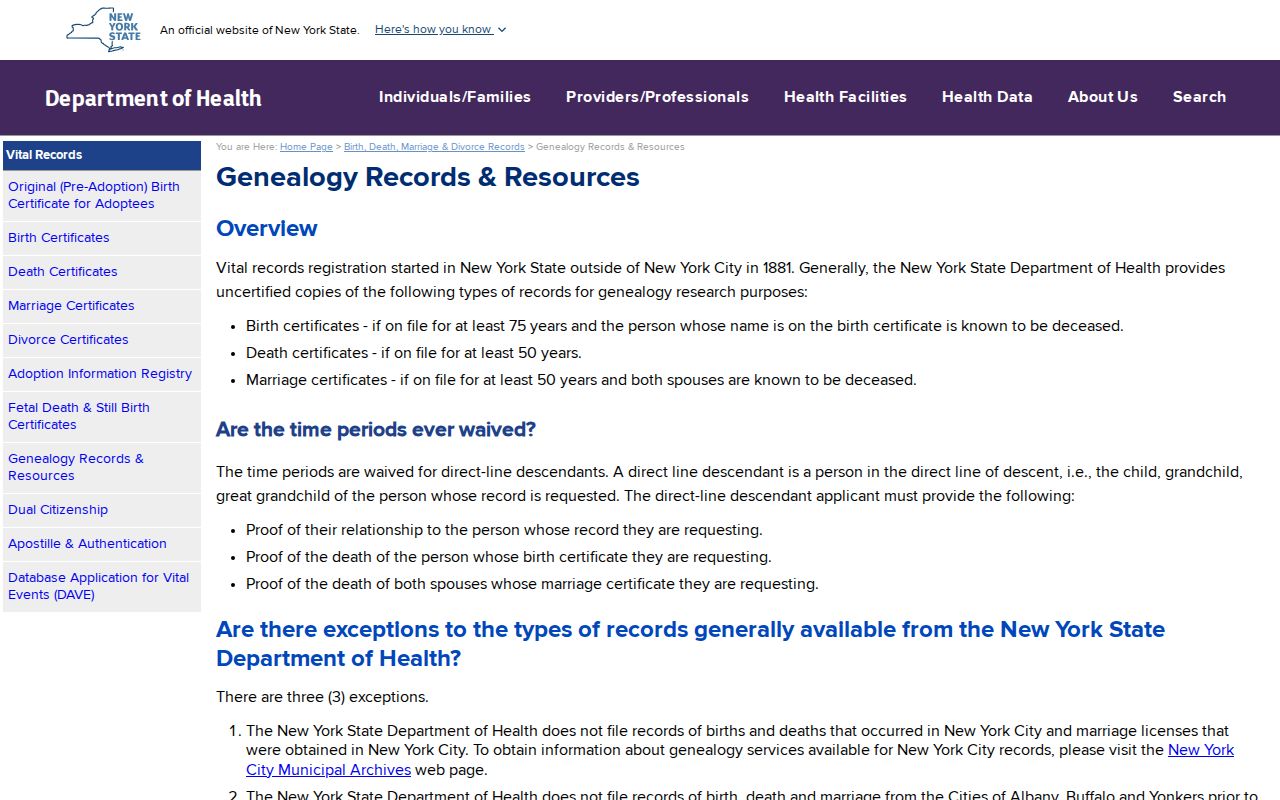
Greenburgh family-history work splits in two. An index can identify the event, while the restricted certificate and the local registrar route remain separate decisions for the researcher.
Greenburgh ZIPs Are Postal Clues
Greenburgh spreads across many postal identities rather than one town ZIP. Ardsley, Dobbs Ferry, Elmsford, Hartsdale, Irvington, and Hastings-on-Hudson each carry their own. So do Greenville or Edgemont, Tarrytown, and the White Plains mailing areas. A ZIP narrows an address. It proves nothing else. The postal city still does not set a town boundary. It also does not set a parcel's jurisdiction or a person's presence at that address.
The USPS ZIP Lookup handles address, city-and-state, and cities-by-ZIP searches. USPS itself cautions that a returned ZIP does not confirm any person at an address. It does not confirm a company there either. Patterns like Greenburgh's 10583, 10603, and 10607 call for an address-level USPS check first. Then a town GIS parcel check follows. The Greenburgh ZIP directory walks through those steps ZIP by ZIP.
Greenburgh Library Preserves Local Memory
Greenburgh Public Library sits at 300 Tarrytown Road. It serves as the local-history bridge between a modern parcel and an older place name. Its holdings run deep: manuscripts, books, maps, a 1915 Town of Greenburgh atlas, newspapers, diaries, photographs, negatives, and slides. Recorded veteran interviews sit there too. Digitization projects have surfaced the Hartsdale Times, the Elmsford Herald, and the Edgemont Echo. A surname, street, organization, or event tied to Greenburgh can be traced there. The result is a dated local clue rather than a claim of present residence.
The Greenburgh Town Clerk page is the town's route to civic-association lists. It also covers boards or commissions information.
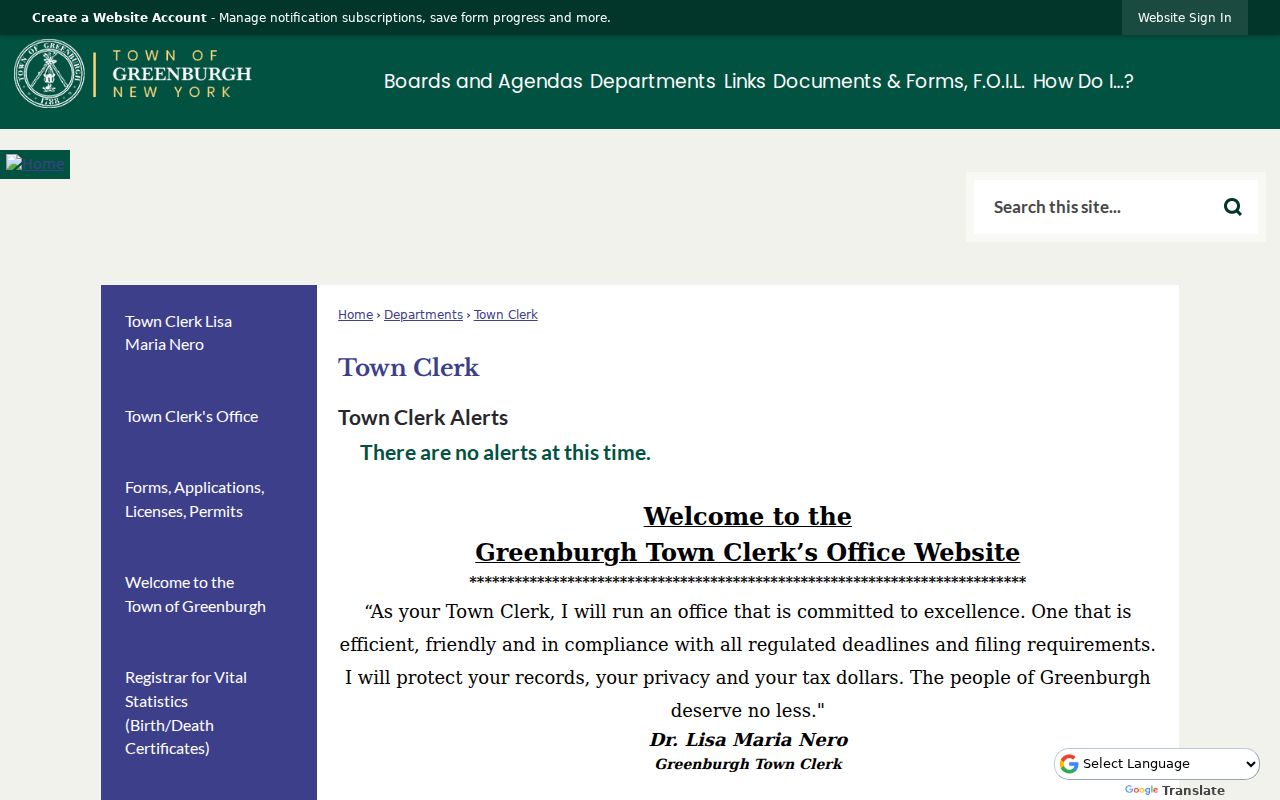
Civic-association information can point to a local contact or a dated community record in Greenburgh. The town page itself offers no public master member directory.